
Multi Agent AI System: Why One Agent Will Never Be Enough
 Ronak Kadhi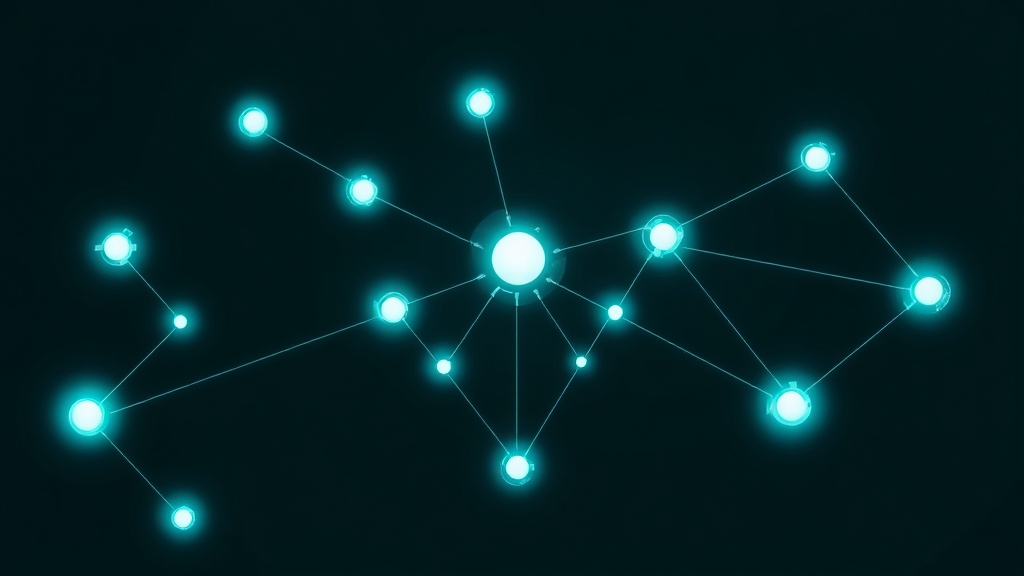
You gave your AI agent a task: "Research our competitors, write a blog post about our differentiators, publish it, and monitor the rankings."
It researched. Sorta. It wrote something. Kinda. It definitely didn't publish or monitor anything.
Single agents hit a ceiling fast. They're generalists forced into specialist work — like asking your backend engineer to also handle design, copywriting, and paid media. The result is mediocre across the board.
This is why multi agent AI systems exist. Not as an academic curiosity, but as the only architecture that actually scales AI work beyond toy demos.
The Single Agent Ceiling Is Real
Here's what happens when you push a single AI agent past its comfort zone:
Context window overload. A single agent juggling research, writing, and analysis burns through its context window fast. By the time it's writing paragraph three, it's already forgotten the nuances from its research phase.
Tool sprawl. Give one agent access to 15 tools and watch it pick the wrong one 40% of the time. Stanford's 2025 research on tool selection showed agent accuracy drops from 92% to 61% when available tools exceed 10.
No specialization. A generalist agent produces B-minus work across everything. A specialist agent produces A-plus work in its lane.
Zero parallelism. One agent means sequential execution. Your "quick task" takes 45 minutes because the agent does everything one step at a time.
The ceiling isn't theoretical. Anyone who's tried to build a serious AI workflow with a single agent has hit it within the first week.
What a Multi Agent AI System Actually Looks Like
Strip away the academic jargon and a multi agent system is just this: multiple specialized agents coordinating to complete work that no single agent could do well alone.
Think of it like a startup team. You don't hire one person to do engineering, marketing, sales, and customer support. You hire specialists and give them a way to collaborate.
A multi agent AI system works the same way:
An orchestrator agent that breaks down complex goals into discrete tasks
Specialist agents that each excel at one type of work
A communication layer that lets agents hand off work, share context, and flag problems
A human-in-the-loop layer for oversight and course correction
The orchestrator doesn't do the work. It plans, delegates, monitors, and adapts. The specialists don't worry about the big picture. They execute their specific task with deep expertise.
Get Your Free Marketing Audit
AI agents analyze your site for SEO, CRO, and content issues — full report in 2 minutes.
Three Multi Agent Architectures (And When to Use Each)
Not all multi agent systems are built the same. The architecture you choose depends on your use case.
Hub-and-Spoke (Orchestrator Pattern)
One central orchestrator agent delegates tasks to specialist agents. All communication flows through the hub.
Best for: Complex workflows with clear task boundaries. Marketing campaigns, content pipelines, research projects.
Example: An orchestrator receives "launch a blog post about AI agents." It creates subtasks: research (sent to a researcher agent), writing (sent to a writer agent), SEO optimization (sent to an SEO agent), publishing (sent to a publisher agent). Each agent reports back to the orchestrator, which tracks progress and handles failures.
Pros: Clear accountability, easy to debug, predictable execution flow. Cons: Orchestrator is a single point of failure. If it misunderstands the goal, every downstream agent suffers.
Hierarchical (Multi-Level Delegation)
Like hub-and-spoke, but with multiple layers. A top-level orchestrator delegates to team leads, who delegate to individual agents.
Best for: Enterprise-scale workflows where a single orchestrator would be overwhelmed. Think: managing 50+ agents across multiple departments.
Example: A CEO agent delegates "Q2 marketing strategy" to a marketing lead agent, which then coordinates researcher, writer, designer, and analytics agents independently.
Pros: Scales to large agent teams. Each level only manages 3-5 direct reports. Cons: More complex to build. Communication latency increases with each layer.
Peer-to-Peer (Agent Mesh)
No central orchestrator. Agents communicate directly with each other based on shared protocols.
Best for: Real-time collaborative tasks where speed matters more than central control. Monitoring systems, incident response.
Example: A monitoring agent detects a traffic spike and directly notifies the scaling agent, which provisions resources while simultaneously alerting the analytics agent to investigate the cause.
Pros: Fastest execution. No bottleneck. Cons: Hardest to debug. Can lead to circular dependencies or conflicting actions without careful design.
Most production multi agent systems use hub-and-spoke because it balances simplicity with power. That's what RunAgents' Mission Control implements.
A Real Multi Agent System in Action: The AI Marketing Team
Let's make this concrete. Here's how a multi agent AI system handles a content marketing workflow — something that typically takes a human team 8-12 hours.
The goal: "Research our top 5 competitors' pricing pages, write a comparison blog post, optimize it for SEO, and publish it."
Agent 1 — Researcher (codename: Loki)
Crawls competitor websites
Extracts pricing data, feature lists, positioning language
Outputs a structured research document with sources
Time: ~4 minutes
Agent 2 — Writer (codename: Quill)
Receives the research document
Writes a 2,000-word comparison post
Follows brand voice guidelines from its SOUL.md identity file
Time: ~6 minutes
Agent 3 — SEO Specialist
Reviews the draft for keyword optimization
Adjusts headings, meta description, internal links
Checks against current SERP results for the target keyword
Time: ~3 minutes
Agent 4 — Publisher
Formats the post for the CMS
Adds images, sets metadata
Publishes as a draft for human review
Time: ~2 minutes
Total agent time: ~15 minutes. Total human involvement: one final review before going live.
That same workflow with a single agent? It would take 30-45 minutes, produce worse output, and require more human editing because the agent's context window was split across four very different tasks.
The Hard Parts: What Makes Multi Agent Systems Tricky
Multi agent AI systems aren't magic. They introduce real engineering challenges.
Agent Communication
Agents need a reliable way to pass context, results, and status updates. This isn't just "send a message" — it's structured handoffs with clear schemas. If your researcher agent outputs unstructured text, your writer agent wastes cycles parsing it.
The fix: Define clear input/output contracts for each agent. At RunAgents, agents communicate through a callback system with typed payloads — status updates, deliverables, comments, and subtask creation all flow through a single authenticated API.
Task Handoff and Dependencies
What happens when Agent A finishes but Agent B isn't ready? What if Agent C depends on both A and B? Task dependency management is the unsexy infrastructure that makes or breaks a multi agent system.
The fix: The orchestrator maintains a task graph with explicit dependencies. Tasks move through defined statuses (inbox → assigned → dispatched → in progress → review → done), and agents can only pick up work when dependencies are met.
Error Recovery
A single agent fails and you restart it. In a multi agent system, one agent's failure can cascade. The researcher crashes mid-task — now the writer has no input, the SEO agent has nothing to optimize, and the publisher has nothing to publish.
The fix: Each agent runs in an isolated sandbox. If one fails, the orchestrator detects the failure, can retry the task, or reassign it. The rest of the system keeps running. an AI agent platform agents run in E2B sandboxes — fully isolated environments where a crash in one agent can't touch another.
The "Too Many Cooks" Problem
More agents isn't always better. Each agent adds latency, cost, and coordination overhead. A five-agent pipeline for a task that one good agent could handle is just waste.
The fix: Start with the minimum viable agent team. Add specialists only when you can measure the quality improvement. If a single agent handles research and writing at 90% quality, you probably don't need to split them.
Why Multi Agent Systems Are Winning in 2026
The shift from single agents to multi agent systems mirrors what happened in software engineering 20 years ago: monoliths → microservices.
Companies that adopted microservices early (Netflix, Amazon, Uber) scaled faster because each service could be developed, deployed, and scaled independently. The same dynamic is playing out with AI agents.
Gartner's 2026 forecast estimates that 40% of enterprise AI deployments will use multi-agent architectures by 2028, up from under 5% in 2025. The reason is simple: real business workflows are too complex for single agents.
According to McKinsey's 2025 AI adoption survey, organizations using multi-agent systems reported 3.2x higher task completion rates compared to single-agent setups for workflows involving more than three distinct steps.
How an AI agent platform Implements Multi Agent Orchestration
an AI agent platform' Mission Control is a production implementation of the hub-and-spoke multi agent pattern.
Here's what it looks like under the hood:
Orchestrator agent (Jarvis) breaks down goals into a task board with subtasks
Specialist agents (researcher, writer, developer, etc.) each have defined tools, identity files, and bounded permissions
Task board tracks every task through its lifecycle with full audit trail
Sandbox isolation — each agent runs in its own E2B sandbox with no access to other agents' environments
Callback system — agents report progress through authenticated webhooks with retry logic (3 attempts with exponential backoff)
Human-in-the-loop — tasks can be flagged for human review at any point; the "review" status pauses the pipeline until a human approves
It's not a framework or a whitepaper. It's an actual running system where you can watch agents coordinate on real work.
FAQ
What's the difference between a multi agent AI system and just running multiple AI prompts?
Multiple prompts are stateless and disconnected. A multi agent system has agents that maintain state, share context through structured handoffs, and coordinate through an orchestration layer. The difference is like emailing tasks to freelancers vs. having a project-managed team with shared tools and real-time communication.
How many agents do I need for a multi agent system?
Start with two: an orchestrator and one specialist. Add agents only when you can clearly define a task boundary where specialization improves quality. Most effective setups use 3-6 agents. Beyond 10, coordination overhead starts eating into the benefits.
Are multi agent AI systems expensive to run?
They use more API calls than a single agent, but they're often cheaper per unit of output because each agent uses fewer tokens (smaller context windows, focused prompts). A multi agent content pipeline might use 40% more tokens total but produce 2-3x better output with less human editing — the net cost is lower.
Can agents in a multi agent system use different AI models?
Yes, and they should. Your researcher might run on a model optimized for factual accuracy, your writer on one tuned for creative output, and your code agent on a model with strong reasoning. Mixing models per agent role is one of the biggest advantages of multi agent architecture.
The Bottom Line
Single agents are demos. Multi agent AI systems are how real work gets done.
The pattern isn't new — it's how human teams have operated forever. Specialization, delegation, coordination, oversight. The only difference is that now the team members happen to be AI agents running in sandboxes instead of humans sitting in offices.
If you're building AI workflows that involve more than one type of task, you need more than one agent. And you need something to orchestrate them.
an AI agent platform gives you Mission Control for exactly this — a multi agent orchestration platform where you can deploy, coordinate, and monitor teams of AI agents working on real tasks. No PhD required.
Get Your Free Marketing Audit
Our AI agents analyze your site and surface every SEO, CRO, and content problem — with prioritized fixes. Full report in 2 minutes.
Audit My Site Free →No credit card required
Keep reading
AI Marketing Agent: What They Actually Do (And How to Deploy One)
The Marketing Team That Never Existed Here's the dirty secret of most "AI marketing" in 2026: it's still just chatbots ...
11 min readOpenClaw Skills: The Ultimate Guide to Agent Capabilities
Skills are what make OpenClaw go from a generic AI assistant to a specialized expert. They're reusable instruction sets ...
9 min readHow to Use OpenClaw for SEO: 6 Autonomous Workflows to Outrank Your Competition
How to Use OpenClaw for SEO: 6 Autonomous Workflows to Outrank Your Competition SEO is one of those disciplines that's ...
17 min read